

How to Store Pots, Pans, and Kitchen Utensils Efficiently
Efficient kitchen storage saves time, protects cookware, and keeps counters clear. Whether you cook daily or only on weekends, a system that matches how you use your pots, pans, and utensils makes meal prep smoother and extends the life of your gear.
These strategies focus on practical layouts, inexpensive tools, and simple furniture solutions so you can reclaim space quickly. If you’re looking for storage supplies or furniture to help implement these ideas, browse Home Cove Picks for curated options.
Assess Your Inventory and Use Patterns
Start by emptying the cabinets and grouping items by type and frequency of use: daily, weekly, seasonal, or seldom. Note bulky pieces—stockpots, Dutch ovens, specialty pans—and the utensils you reach for most at the stove. A quick inventory prevents duplicate purchases and helps decide which items must stay within arm’s reach.
Maximize Cabinet Space: Stacking, Dividers, and Bins
Inside cabinets, use vertical space. Stack pans with thin felt or silicone protectors to avoid scratches. Adjustable shelf risers let you store lids or small skillets above a lower shelf so both areas remain accessible. Use deep drawers for pots and pans with soft liners to reduce sliding.
For grouped small items—muffin tins, cake pans, seasonal bakeware—use plastic storage bins with lids. Bins keep similar pieces together, slide easily on pantry shelves, and protect against dust when stored high or in a basement pantry.
Drawer and Utensil Organization That Works
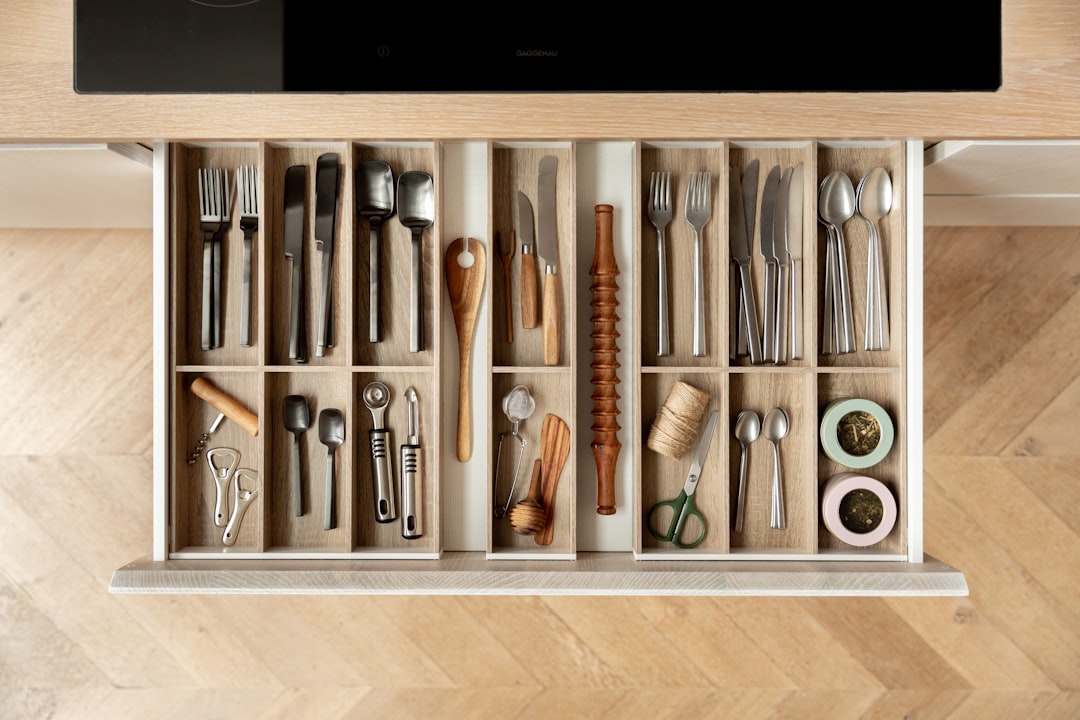
Designate drawers by function: one for immediate-cook utensils (spatulas, wooden spoons), one for prep tools (peelers, zesters), one for baking gadgets. Use modular dividers so you can resize compartments as the collection changes. Magnetic knife strips free counter space and protect blades.
Consider a vertical utensil crock for frequently used spoons and spatulas beside the range. That keeps reach time to a few inches without cluttering drawers or countertops.
Open Shelves, Racks, and Wall Storage
Open shelving or wall-mounted racks are ideal for attractive or heavy cookware you use regularly. Hang skillets by hooks or use a sturdy rail for utensils. Open display makes it faster to grab items and shows when something is out of place.
If you need strong, freestanding shelving that blends with living areas, consider using bookshelves rated for kitchen use to hold cast-iron pans, mixing bowls, and stacked bowls—just be sure shelves are treated or lined for easy cleaning.
Pot and Pan Storage Solutions: Racks, Lids, and Protectors
Choose one primary system for pots and lids to avoid confusion: vertical pan racks, pull-out pan organizers, or lid organizers mounted on doors. Vertical racks allow you to stand pans on edge for easy removal. Lid organizers—either on cabinet doors or in a dedicated drawer—save time and reduce the pileup inside cabinets.
For nested cookware, place a soft silicone liner between each pan. If you have limited cabinet height, store skillet handles facing outward and keep heavier pieces on lower shelves for safety.
Repurpose Small Furniture for Extra Kitchen Storage
When cabinets are full, small, multipurpose furniture can add storage without a remodel. A low bench with a lift-top or cubby stores bulky pots, slow cookers, and rarely used appliances while doubling as seating—look at storage benches for models with hinged tops or internal compartments.
For an easy, attractive solution that fits entryways or kitchen nooks, a product like the VASAGLE Storage Chest provides a durable surface and hidden interior for cookware you don’t use daily.
Nightstands with drawers can be repurposed as small rolling prep stations or storage for frequently used utensils and oils—especially in kitchens lacking island space. Consider compact nightstands with drawers to keep counter clutter tucked out of sight.
Under-Sink and Pantry Strategies for Bulky Items
Under-sink areas are awkward but useful: install tiered pull-out shelves or sliding baskets for cleaning supplies and small pots. In pantries, place seldom-used large cookware toward the top and everyday items at eye level.
For seasonal cookware—holiday roasters, extra serving bowls—store in labeled, stackable containers like a Hefty 72 Qt Hi-Rise Storage Bin with Lid. These hold bulky pieces, keep dust out, and slide easily on high shelves or into a garage storage area.
Maintenance, Rotation, and Labeling
Every 6–12 months, reassess: donate seldom-used items, replace damaged liners, and wipe shelves. Keep a small set of repair tools (screws, hooks, adhesive pads) in a labeled box for quick fixes to racks or rail systems.
Label shelves and bins—clear labeling reduces decision fatigue and keeps family members returning items to the right place. Use a consistent labeling method (printed labels or a label maker) for a clean look and quick readability.
Quick Checklist
- Empty and sort cookware by frequency of use.
- Keep daily pots/pans within 1–2 steps of the stove.
- Use vertical racks and lid organizers to save shelf depth.
- Group small or seasonal items in stackable bins with lids.
- Repurpose compact furniture (storage benches, small chests) for overflow storage.
- Label containers and rotate inventory every 6–12 months.
FAQ
- How should I store cast-iron pans?
Clean and dry thoroughly, season lightly, and store separated with paper or cloth between pieces. Keep them in a low, dry space to prevent rust.
- Are hanging pots and pans safe?
Yes—if the rack and ceiling or wall anchors are rated for the combined weight. Use studs or professional anchors for heavy cookware.
- What’s the best way to store lids?
Use a door-mounted lid organizer, a lid-dedicated drawer, or vertical slots so lids stand on edge and are easy to match to pans.
- Can I store cookware in open shelving?
Open shelving is fine for frequently used cookware but requires regular cleaning and sturdy shelves rated for heavy loads.
- How do I prevent scratches when stacking pans?
Place soft liners, felt pads, or silicone protectors between pans. Avoid stacking nonstick pans directly if surfaces can rub.
Conclusion
Efficient storage blends proximity, protection, and simplicity: keep daily tools near the cooktop, protect surfaces when stacking, and use bins or furniture to corral bulky items. Start with a single cabinet or drawer, apply one or two of the strategies above, and expand the system as you see what works. Practical furniture and the right containers make the difference between a cluttered kitchen and a workspace that supports fast, enjoyable cooking.
Products Featured in This Article

VASAGLE Storage Chest, Storage Benc…
Product description Spacious to Organize More Items Large Capacity The large hidden compartment of this storage…

Hefty 72 Qt Hi-Rise Storage Bin wit…
Product description Find the right HI-RISE Container Add to Cart Add to Cart Add to Cart…